Interview by Zoë Brigley
Welcome back to our series on writing the “More Than Human”. We offer a set of interviews with poets and writers on how they approach writing about the environment. The more-than-human is a phrase that seeks to side-step traditional nature-culture dualisms and draw attention to the unity of all life as a kind of shared commonwealth existing on a fragile planet. It also reminds us humans that there is more to life, that there is more world, than the human. It relocates us in relation to the mystery.
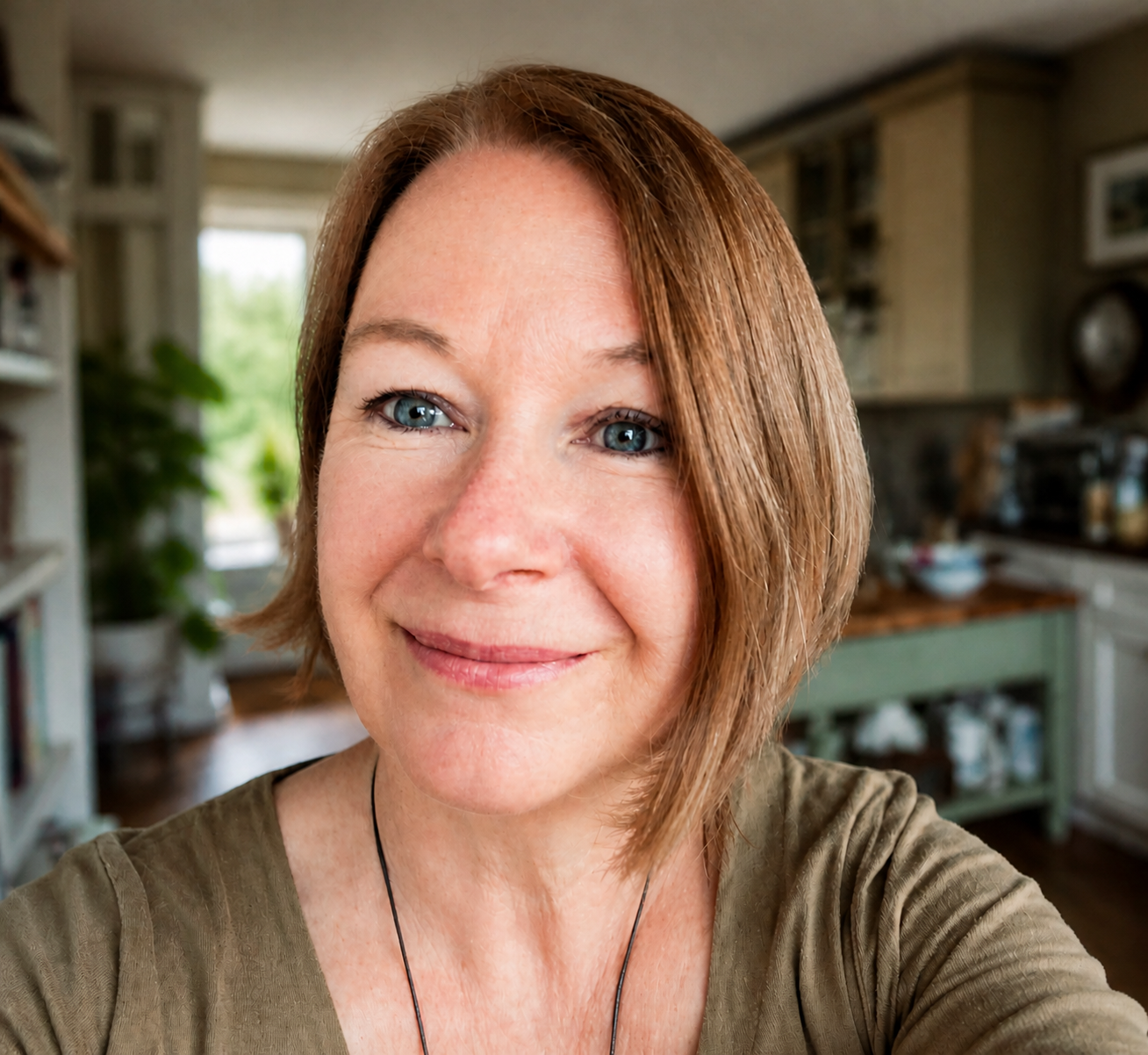
Anne Caldwell is a poet, lecturer and editor based in Yorkshire. She is known for prose poetry and writing about place. Her latest and fifth collection is The Language of Now (Valley Press). Anne grows vegetables on her allotment and is learning the art of bee keeping.
Wild Swimmer
Zoë Brigley: We recently had an article published by Lucy Baena called ‘The Myth of the Wild Swimmer’ in which she writes about how unrealistic media images are becoming toxic in making engaging with the outdoors seem effortless, when that is not the case for many people. Berea talks about disabled people, neurodivergent people, carers etc. I feel like in this poem too the wild swimmer is not an Instagram stereotype?
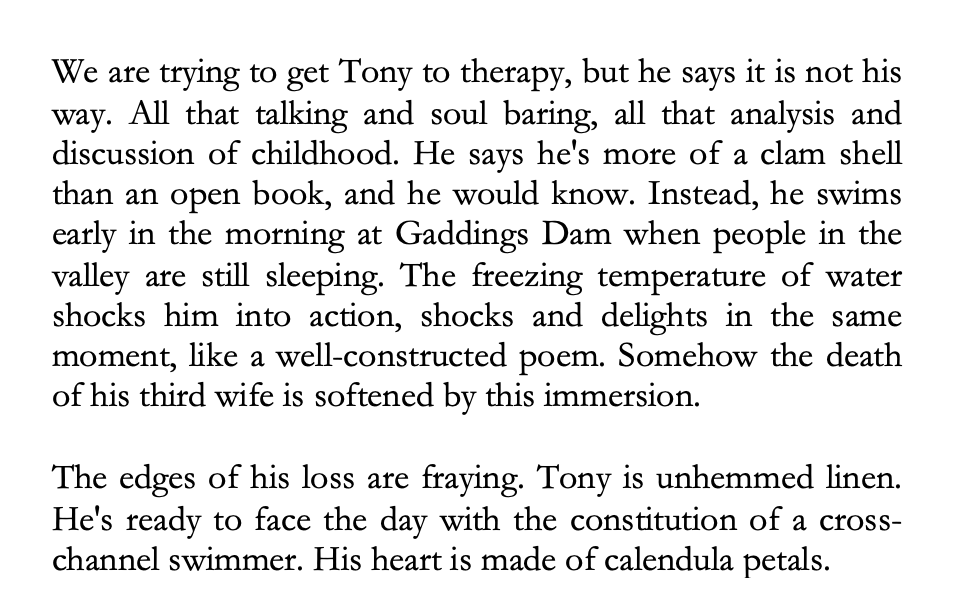
Anne Caldwell: Yes, Zoë, I think you are right. I live in an area of West Yorkshire where people of all backgrounds go swimming outdoors on a very regular basis and this prose poem features a fictional character who could be one of these locals. The poem takes us into Tony’s character, layer by layer as the complexity of his relationship with water, wild swimming, and grief is slowly revealed.
Zoë: I am interested in this idea of men swimming to deal with depression and anxiety. My grandfather used to swim every morning. He has been a miner and was a broad, muscular man but very quiet and gentle, and he seldom talked about his traumatic experience down the mine or in the Airforce during World War Two. This poem makes me think about men’s relationship with nature and mental health?
Anne: I too have known many men in my life who would not talk or discuss their experiences or feelings but would find physical activity outdoors to be a good outlet. I was married to a man from the Northeast of England who found it very difficult to open up verbally but found great pleasure in wild camping.
In my poem, a deep connection to the ‘more than human’ world is important, as a place of recovery and sanctuary for Tony when there are no words available. Immersion in water is a way of finding intimacy with the natural world and I think has always been associated with healing. I think this is true for women as well as men, but this poem focusses on my character’s own personal experience. The final line stresses his heart’s intimacy to the plant life around him. The metaphor was inspired by my growing of calendula on my allotment this year that I have turned into a balm for skin conditions such as eczema. The notion of the flower petals heart stresses fragility intertwined with masculinity.
Zoë: You chose to use a long line with a prose poem feel to tell this story, and I love the turn at the end in that delicate image of the heart. Could you talk to the formal choices and decisions about how the narrative would unfold?
Anne: I am so pleased that you observed this use of lines within the narrative, Zoe. It is intentional. I think the rhythm of the poem is meant to suggest the motion of swimming. This shifts in the second paragraph to a shorter couple of lines, a moment of optimism where we see Tony ‘ready to face the day’. This is then undercut by the final short line that suggests his vulnerability. I love the way a prose poem can use rhythm like this in a similar way to lineated verse, but perhaps more subtle in its approach because the rhythm is hidden in paragraphs. The poem needs to be read out loud to appreciate the musicality and this is why I mention the notion of a well-constructed poem in the text. Crafting applies as much to prose poetry as any other poetic form. I don’t think the narrative goes in the direction that would be expected, and this is the strength of a prose poem, (as opposed to flash fiction, perhaps) with its layered possibilities of story and imagery.
Zoë: Do you have anything else you would like to tell us about this poem?
Anne: For such a short prose poem, I have made more use of repetition that I would normally do, and this was a new departure for me: ‘all that’, ‘he says’ and ‘shocks’ are intentional repetitions. They give the poem a meditative quality that suits the subject, I think, mirroring the daily practice of swimming in a wild place. I hope readers enjoy the piece and this discussion we have had together which has made me think closely about my writing process.
Discover more from Modron Magazine
Subscribe to get the latest posts sent to your email.


