Interview by Zoë Brigley
Welcome back to our series on writing the #MoreThanHuman. We offer a set of interviews with poets and writers on how they approach writing about the environment. The more-than-human is a phrase that seeks to side-step traditional nature-culture dualisms and draw attention to the unity of all life as a kind of shared commonwealth existing on a fragile planet. It also reminds us humans that there is more to life, that there is more world, than the human. It relocates us in relation to the mystery.
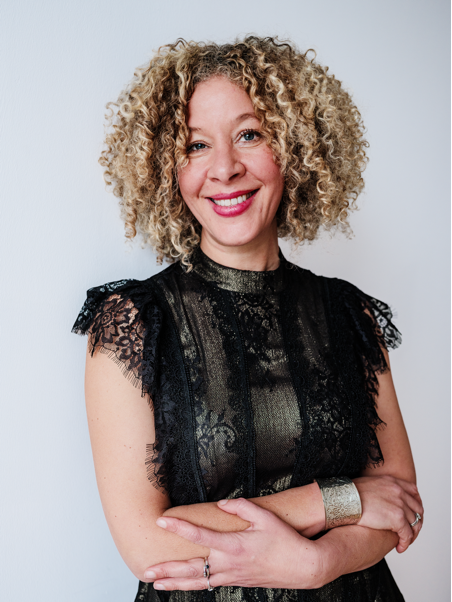
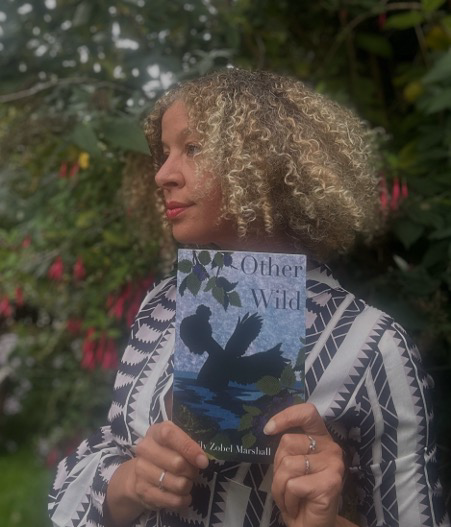
This week we meet Emily Zobel Marshall. She is a poet, activist and Professor of Postcolonial Literature at Leeds Beckett University. Of French-Caribbean and British heritage, she researches African diasporic cultures, trickster folklore and Caribbean carnival. She has published several academic monographs and two poetry collections with Peepal Tree Press, Bath of Herbs (2023) and Other Wild (2025).
Anansi Bruk it Up: An Epic
I.
You would have thought that he came into the world like the howl and beat of a storm, but it happened quietly, like a lover’s whisper, soft as peaches fur. Had I not been watching, had I not been awake, I would have missed it. Sit and listen a while, my beloved, and let me tell you it came to pass.
Kwaku Anansi, Wednesday-born, came into being on a day wedged between days of the week, before weeks were weeks and days were days and time was time, beloved. Time was not time at all – just the clash and shift of tectonic plates, of continents ripping apart, reforming, reshaping and somewhere in this the steaming broth of beginning came Anansi, pushing up through the winter deserts sands under a cold and waning moon.
Spider. Man. Woman. God. A light shone from his abdomen and his eyes, covered as they were with a thick mucus, protected him from the wind-whipped sands. Black skin sealed his mouth shut, no sign of cutting teeth and he was silent, oh so silent it hurt the ears to hear him, my beloved.
His belly full of cosmos, fat balls hanging thick, vibrating with the big clit energy lodged in the base of his hairy spider dick. Griped with the need to part the thighs of others, the will to power, fit to brain-burst with whirling stories, with words pushing up through his guts seeking freedom – but I am getting ahead of myself, beloved.
All this while he existed in the in-between, the upside down, the b-side, in both the she and he of things. And there is no smell in the desert, even when it rains; Anansi was bored – nothing to hear or smell or taste – until one day the Sky-God Nyame sent to him down a ladder made of umbilical cords.
Into the realm of fierce gods Anansi climbed. The skin fell from his eyes. His long tongue was freed from his sealed mouth. On his way up, he began to story, he began to sing. Shhh, listen, hear Anansi now, his song is bringing other creatures into being, his music is spinning women man child animal – all imperfect perfection.
II.
You will be wondering what happens now, beloved, so you should – this is a Jackmandora story unspooling fast and wild like the Anansi thread he starts to spit and stick. He spins the story strong and long and learns to web – finer than the winged veins of a moth, tougher than an iron shackle. He web-hangs moon and stars, captures light before it wiggles free, invites the desert sunshine to bounce and bend but never break in his creation.
He catches flies and shudders with pride at his web’s lethal exquisiteness, created by his own fat black hairy body. He starts to spin some more – he crafts a people, Akan Asante of Ghana, each one born knowing he is the keeper of their secrets, the spring of beginnings.
Every night, after spinning drums and golden stools for them, he climbs up to the gods, tries hard to seduce the so-called omnipotent sky god Nyame’s wife with his long wet silver tongue, a tongue now freed, alight, fizzing with new words birthing from spider saliva – verses, poems, prose, stanzas slip and slide from that long song tongue that links his cosmos belly to his sliver lips.
Hear this, one time Anansi grew a penis 12 foot long and bruk it up onto 12 pieces, slipped a piece into each of Nyame’s daughter’s rooms to impregnate them. He became woman too and sung songs in Nyame’s ears while he slept of things he could do to him that Nyame never even knew he wanted. He was queer and sex and sexlessness and all the time storying storying storying. And I am sorry if you think this is not a tale for children, my beloved, but I hope you listen still and understand that only thorough this knowing will you follow threads to your beginning.
Enraged, Nyame banished Anansi, but still he sneaked into his realm, they knew he’d been there – saw his spider hair shed amongst the clouds, metallic scent of lightening hanging in the morning air, wet marks where his new long tongue had drooled and spooled his words.
From Nyame he stole wisdom for his Akan people, along with toxic snakes and slow diseases – in every one of his creations smouldered fires of destruction, his anarchic howl forever testing the laws the Akan tried to lash their clan too.
They told his stories, beloved, oh did they tell his stories. And tied as they were to rules, they tingled with delight to hear his freedom antics, until one day the others came and chained the Akan, tried to eat their souls in shit-packed forts, let crabs feast on their flesh, tossing their babies from the ships and once again time was not time and days were not days, but one long dark shadow of decay and agony floating on the violent waves.
Anansi boarded ships and watched, eight-eyed, up in rafters, and while he felt good and bad are always tangled into one, he knew this was vile and his people were bruk up. After landing, years were not years as they slashed the cane and poured their blood onto red earth. At night after the fields, Anansi spooled and spun his stories harder than he had ever done before, no breaks to visit Nyame, he had to show people ways to trick, to burn, to break, to lie and lie, to plot, to story, to live, to hope. This is how it came to pass, beloved, and I wish it were not so. Listen carefully to next part, and then I’ll let you go.
III.
Hush now, Beloved, for this part of Anansi’s thread is coming to an end. And entwined, twisted as it is, you must know it. Anansi was dog-beat tired after plantation story spinning long and hard. Hear Anansi preach across the wind-stirred canes in the gloaming – big word talk of rebellion, revolution, change, freedom. Sometimes the people heard him sing a self-song sung gently, sending Akan dreams, praise songs to Nyame and memories so far way they would have fallen through the holes of the mind had Anansi not been there to gather them up and sculpt their contours.
Anansi’s long spider legs became muscled Black thighs, Black calves, his face that of an Akan man, his spider self came to look like his own people, but don’t you be tricked, beloved, for he could shift shape from man to spider, woman, child and back again in the blink of a sleepy eye, just as he always had.
When moon hid her pale face, Anansi climbed Maroon mountains to help warrior Nanny catch British bullets in her wide backside and fire them out pum pum pum into the ghostly soldiers faces. Sam Sharpe, Tacky, Cudjoe, Bogle, Queen Cubah and even Toussaint Louverture plotted with Anansi – spreading rebellion fire with strategy and the wisdom of cunning betta than strong.
So-called emancipation was proclaimed after the suffering centuries and Anansi he think ahhhh, maybe I can rest a while now, but oh no, beloved, the misery was one long sad colonising song that went on and on after the trick of freedom – but it was not all pain, beloved, there was also belly laughs and rebuilding and restorying and when Anansi dance at carnival in his zoot suit and sharp top hat and cane, all the ladies come and catch a little sexy wine with him and he feel his new-old African self again, and things, I hesitate to say it, my beloved, improved a little for your people.
Anansi kept the past alive sharp sharp and they told his tales right there in the dancehalls and universities, the playgrounds and Maroon towns, in taxis and theatres and on the street corners under the big ticking clock of time in Halfwaytree. Story seeds carried on the ocean wave and grew long and strong in everyplace we travelled to. And so it ends, beloved, but the end is only a beginning and if you sit still on mountain forest floor you will still hear Anansi, quiet quiet, like a lover’s whisper, soft as peaches fur, sing his trickster song.
Stay and listen, my beloved, and be sure to pass his story on.
Zoë Brigley: This long poem bridges ecology, justice, myth and storytelling. Could you tell us a bit more about your take on an epic and what inspired it?
Emily Zobel Marshall: I have always been fascinated by trickster folklore and mythology. I grew up in Eryri in a tiny village called Croesor. We were taught through the medium of Welsh and in our school of 16 pupils the Mabinogion was central to our curriculum, and those myths are full of trickster figures. At home, my Martinican mum read me Caribbean trickster tales – as I child I loved imagining playing tricks on controlling adults.
We find the trickster figure in the stories in all indigenous cultures worldwide and I think we return to this character because the trickster can break all the rules of society – and we secretly long to be able to do this, but we have to adhere to moral and social codes of behaviour in order to uphold a functioning community.
In my two academic studies of African trickster figures, Anansi’s Journey: A Story of Jamaican Cultural Resistance and America Trickster: Trauma, Tradition and Brer Rabbit , I show how trickster stories take on new meanings when told by people living in enslaved societies. Enslaved Akan-Ashanti people from Ghana brought the stories of the trickster spider Anansi into the plantation environment and they started to function as coded methods of survival and resistance against the plantation system. Through the stories the enslaved could pass on ways to use their brains rather than their brawn and hone their linguistic skills to undermine the plantation system from within. In the Anansi stories, Anansi lies, deceives, steals, works slowly and makes elaborate and cunning plans to turn the table on his adversaries in any way he can. In the original Ghanian stories, Anansi was a mediator in Akan-Ashanti religious belief systems, existing between the world of the gods and the world of humankind, but on the plantations he came down to earth, so to speak, and came to represent the needs of the people who told his stories in brutal captivity.
Anansi is also a poet and many of his tricks are facilitated by his silver tongue – his linguistic dexterity – and being a good speaker has always been celebrated across the cultures of African diaspora. These are skills which can also ensure survival against the odds – being able to lie, smooth-talk, placate, charm, diss and enrapture through your words – these are the qualities of Anansi, the destructor and creator, that I wanted to capture in my Anansi epic poem.
I called in an epic to write back to the idea of what an ‘epic’ looks like; it is a form associated with European culture so this ‘writes back’ to that idea and inserts Anansi and his ‘grand adventures’ at the centre of a Eurocentric convention. It is also a poem that asks us to listen and observe the natural world, for we are enmeshed in it and it is a part of us. We often lose sight of this in our modern lives.
Zoë: In the best myths, there are both familiar story tropes and strange twists and turns, just as in nature there are patterns that remind us of the human world but we would do well to remember how different creatures of the more than human are to us. Anansi feels like that to me – a sympathetic character, a personhood we can empathise with, and yet otherworldly and divine too. What do you think?
Emily: In the traditional stories, Anansi is ambiguous and morally dubious – some people do struggle with this aspect of him and in the 90’s there was even a debate amongst school teachers in Jamaica as some were calling for the folk character to be banned for being told in schools. They argued that Anansi is a symbol of gangsterism and greed – all that was wrong with Jamaican society.
But Anansi was born outside a Christian worldview and it is wrong to try and interpret him – or any indigenous trickster – within that framework. These are not Aesop’s fables with a clear moral endings. These stories are told by tellers that trust that the audience will take what they need from the tale – they may act like Anansi to survive, or they may avoid being the dupe. They are philosophical stories where the binary of good and bad is collapsed and this sets the listener or reader free to decide to how they want to navigate the tale.
In the African versions of the stories Anansi plays havoc in the world of the gods and is a bringer of both wonderful and terrible things to the Akan-Asante world – he cannot be trusted but he is deeply lovable too. He can lead you down a dark alley and leave you there, but he can also liberate you to find your path. It is this ambiguity which makes the trickster so appealing.
Anansi is also a spider – the perfect symbolic creature for enslaved people. The spider watches from the rafters, collecting information, just as the enslaved watched their masters. He makes a web from his own substance which is both delicate but deadly. He spins and weaves his web just as he spins and weaves stories, so in this poem Anansi is spinning the world into being with his eight long legs but also enmeshing us in a journey through the whole of Black history.
Zoë: Gender is very intriguing in this poem as Anansi seems in parallel with characters like Tiresias who is not any one gender nor on one side of a binary. I would love to hear more on what you think about that.
Emily: Yes there are definite parallels there – Tiresaias lived as a woman and man – and Anansi will change gender depending on the trick he wants to play. I have pushed that aspect of him further here – in Caribbean and African versions of the stories he tends to be a man shape shifting into a woman, but my Anansi, born in the desert sands, transcends the boundaries of gender and sex. These are the most exciting aspect of Anansi in my view, this ability to question our very boundaried and binary limited view of the world and our own identities.
Zoë: The poem is written addressed to a “Beloved”. Does that intimacy change the telling of the poem?
Emily: I hope it does. I have issues with Rudyard Kipling and his colonial and sometimes prejudiced worldview, but when I was little my mother used to read me Kipling’s Just So Stories and I loved them. My mother was from Martinque, an island in the French Caribbean, and she read me Caribbean stories alongside other andromorphic tales like The Wind in the Willows, Winnie the Pooh, Beatrix Potter’s Peter Rabbit and Kipling’s tales (all written by authors who were influenced by African-rooted trickster stories). In Kipling’s Just So Stories the listener is addressed, ‘Oh Best Beloved’ and that created an intimacy that I loved as a child – but it also mirrors the call-and-response central to oral storytelling practices as the listener is invited to be a part of the story.
Although this Anansi epic is scribal, the stories were told orally in the Caribbean and Africa until they were written down by Europeans in the late 1800s, so I am also trying to capture the oral and oral story techniques on the page.
The name ‘Beloved’ is also a nod to Toni Morrsion, I teach and love her novel Beloved and she too tried to incorporate orality into her storytelling. Finally, my grandfather Joesph Zobel grew up in an impoverished cane cutting village in Martinque – he became a well-known author and wrote a semi-autobiographical novel Black Shack Alley (1950), which is now a penguin classic and a film (Sugar Cane Alley). My grandfather tells of his mentor, an old man on the plantation, a griot (storyteller), who first told by grandfather, through storytelling, about slavery, Africa and Black history. He awakened a Black consciousness within him and these moments of the book and film are profoundly moving. They always resonated with me and this is also why I have been obsessed with the power of oral storytelling and Anansi – and trying to capture that in my poetry.
Zoë: The prose poem has become a more popular form than it used to be. What do you think it offers that other forms do not?
Emily: I think the prose poem it allows for great freedoms and room for experimentation – your poem can become a hybrid of forms, you are not tied to a single style or form or to rhyming. You can also tell a story in unexpected ways – reverse it, surprise the reader, ambush them – it also gives more scope for unreliable or trickster narration.
Zoë: Is there anything else you want to tell us about this poem?
Emily: In this poem I have drawn from stories found in the earliest recordings of the Anansi tales, Akan-Ashanti Anansi Folktales, compiled by the anthropologist R. S. Rattray in 1930. Although he was a European colonial, Rattray recorded the stories in Ghana (formerly the Gold Coast) first in the Twi African language and then into English. They are original tales full of humor, pain, magic, destruction – and sex.
I have also drawn from some classic Jamaican Anansi stories as I spent four months in Jamaica collecting stories for fieldwork. What I wanted to do with my poem is to create a contemporary Anansi that embraces the impossibility of gender and sex binaries. I also wanted my poem to re-center Anansi as a creature from the very beginning of time (before time was time). In the Anansi Epic, Anansi guides us through the story of the peoples of the African diaspora and the impossible violence and brutality our ancestors survived.
We are a resilient people who have always used out cultural forms as methods of resistance and Anansi encapsulates all of this beauty and all of this pain. But he is also funny, rude, mischievous and always challenging – if there was any, static, monolithic view on life – Anansi Bruk it Up!
Discover more from Modron Magazine
Subscribe to get the latest posts sent to your email.

 Modron Magazine