Interview by Zoë Brigley
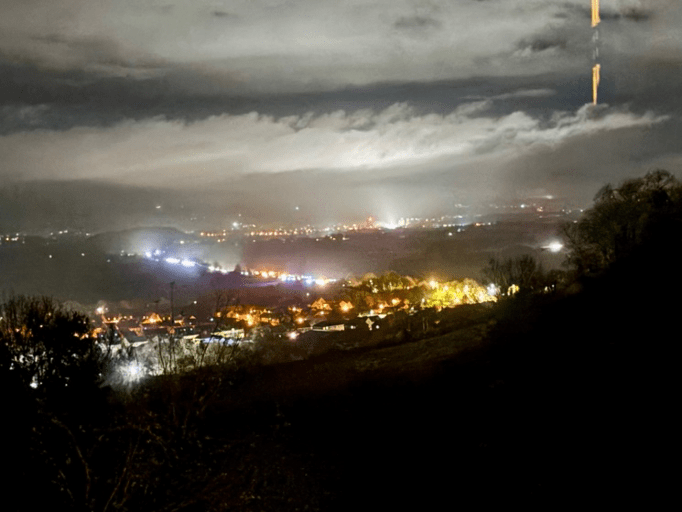
time gazing each night, with a sense of looking out on the entire planet.”
Welcome back to our series on writing the “More Than Human”. We offer a set of interviews with poets and writers on how they approach writing about the environment. The more-than-human is a phrase that seeks to side-step traditional nature-culture dualisms and draw attention to the unity of all life as a kind of shared commonwealth existing on a fragile planet. It also reminds us humans that there is more to life, that there is more world, than the human. It relocates us in relation to the mystery.
This week we meet Rachael Clyne from Glastonbury who feels deeply about the land. Her collection, Singing at the Bone Tree (Indigo Dreams) is about eco-concerns. Her Seren collection, You’ll Never Be Anyone Else, explores themes of identity and otherness, She’s currently building a collection that comments on the world state alongside the journey of ageing.
The Importance of Washing Machines in Times of Climate Collapse
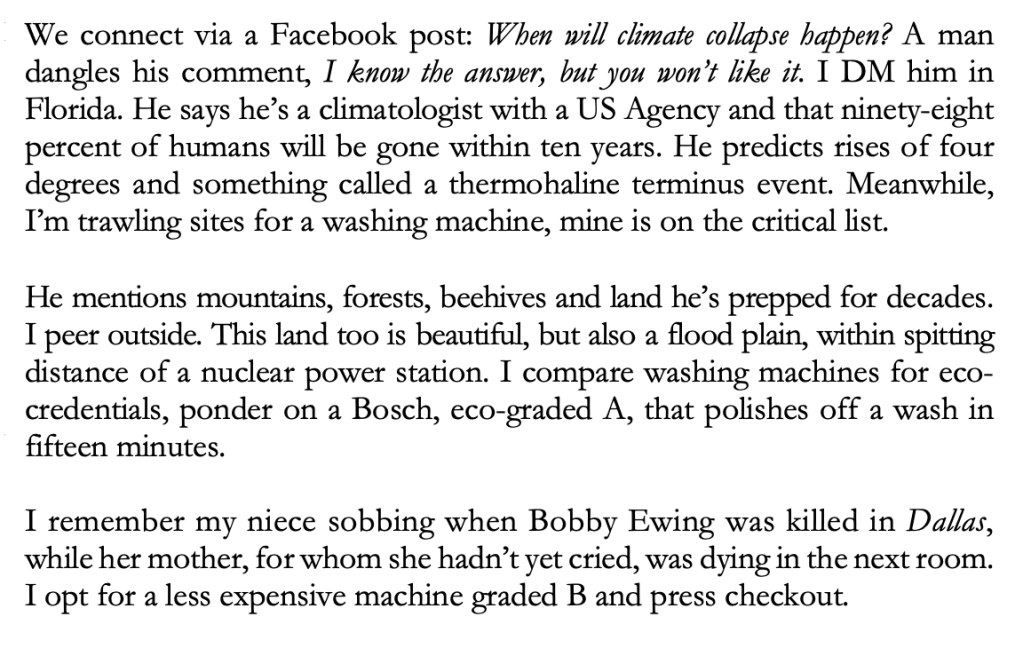
Zoë Brigley: Thanks for sharing this poem with us, which was successful in the Café Writers’ Competition. Given the cost of living and ecological costs, household appliances feel like a topical subject at the moment. There is a kind of dark humour here maybe in the search for a new washing machine?
Rachael Clyne: The poem is a condensed version of a real exchange. My main point is that even those of us highly aware of climate, social and ecological collapse, are still in denial at times. It wasn’t till afterward I realised the irony of my appliance search in tandem with the conversation. I had been cushioned by the notion that I’d escape the worst of collapse, because of my age, but his stark reply that 98% of us will be wiped out within my lifetime, triggered me into dissociating. The irony made me laugh and realised this juxtaposition is what would make a good poem. It also enables the poem reflect the complexity and contradiction of the issue. We know we are on the brink of collapse and we escape to find solace in the mundane, the daily routine. The two inevitably cohabit.
Zoë: Social media in this poem raises the temperature of the worry by connecting the speaker to a climatologist. It feels like bathos – that juxtaposition of the banal and the existential. Is that a tension in the poem?
Rachael: Definitely. The FB group concerned is for those involved in Deep Adaptation, a movement based on the premise that collapse is unavoidable, regardless of efforts, and that we must adapt to save what we can. It has spawned communities living off grid and learning to survive with minimal modern conveniences. Its main proponents have been Joanna Macy and Jim Bendell. Social media is still the main means to spread and promote ideas, even though it too is descending further into chaos and division. I might dip into the group if a post draws me, for example today there was a heated discussion about AI material on its page. Facebook discussions inevitably include smartass answers and petty comments. The woman’s question was genuine, but the guy’s remark drew my curiosity. The tension between existential and banal runs through the poem e.g. my sister dying while her daughter sobs over a TV soap ‘death’ in the next room. Also the line, ‘This land too is beautiful, but also a flood plain, within spitting distance of a nuclear power station’. My home offers a panoramic view of annual flooding on the Somerset Levels which worsens yearly. For decades, I have watched what used to be big puddles, now joining up as lakes. The entire plain is predicted to disappear underwater, and the placement of Hinkley Point power station is perilous.
Zoë: What does the prose poem form bring to the telling of the poem that other forms do not offer?
Rachael: In the end it was the best way to condense a lengthy description and bring its essence into sharper relief. A lineated version would have diverted me into line endings and internal rhymes etc, when a highlighted account is more appropriate. I had ruthless editing support from my crit group, otherwise it might have been better as an article. I’m pleased with how it turned out.
Zoë: Is there anything else you want to tell us about this poem?
Rachael: There is more I could have said about the man. Contacting strangers via messenger is risky – we don’t know if they’re who they say they are, but it was his words that mattered. Later I realised he’s what’s called a prepper in the US. He was smug about his survival and cache of military weaponry, ready for action. He’d spent 20 years prepping his land with greenhouses, some submerged, and other things he mentioned. He relished being at what he called ground zero in Florida. Most Deep Adaptors in this country, are peace-loving, spiritual types, living off grid in vans, eco-builds on quiet patches of nature. A very different scene. By the way, the washing machine is far more efficient than the old one.
Discover more from Modron Magazine
Subscribe to get the latest posts sent to your email.


