Interview by Zoë Brigley
Welcome back to our series on writing the #MoreThanHuman. We offer a set of interviews with poets and writers on how they approach writing about the environment. The more-than-human is a phrase that seeks to side-step traditional nature-culture dualisms and draw attention to the unity of all life as a kind of shared commonwealth existing on a fragile planet. It also reminds us humans that there is more to life, that there is more world, than the human. It relocates us in relation to the mystery.
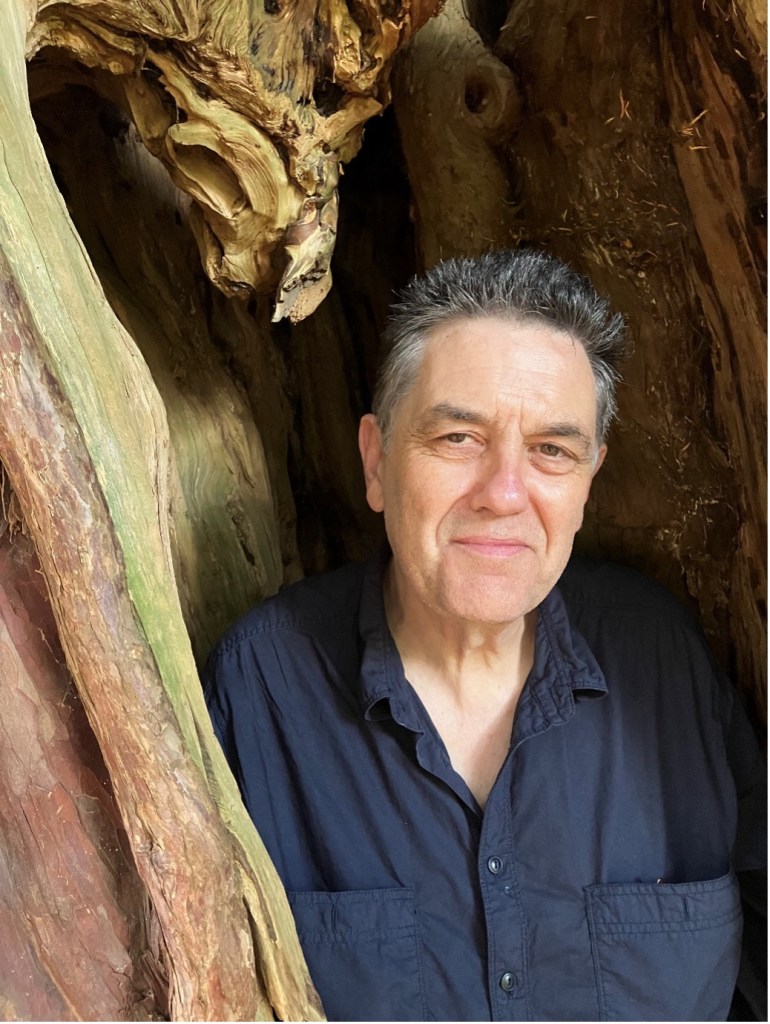
This week we meet Paul Henry, a poet and musician based in Powys. Paul’s nine Seren Books collections include The Brittle Sea: New & Selected Poems, The Glass Aisle – which led to a touring collaboration with Stornoway frontman Brian Briggs – and As if to Sing, winner of the Wales Book of the Year Poetry Award. Find Paul’s website here.
The Flayed Oak
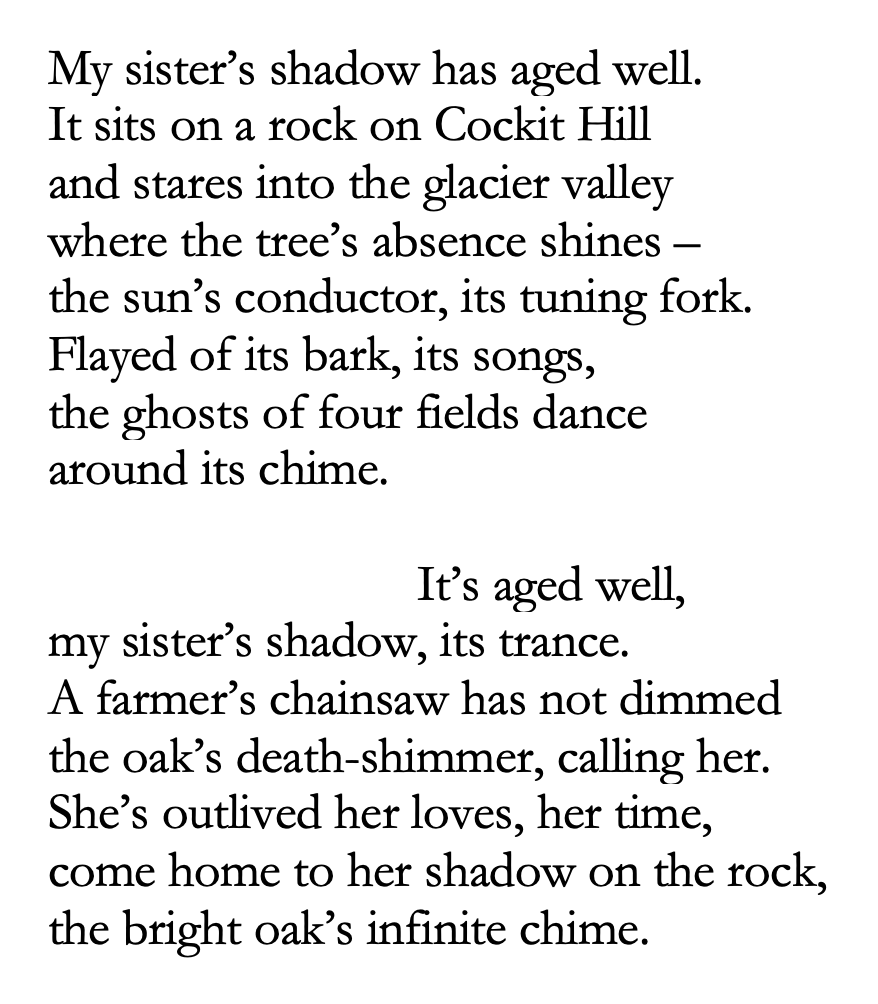
Zoë Brigley: The form of this poem intrigues me. On one level, the space between the two stanzas might represent the flaying of the oak, the stripping away of its bark? It also strikes me as two pieces that might fit together but are held apart by white space. Could you say something about that?
Paul Henry: Both of those observations touch on the poem’s physical and metaphysical elements, as hopefully suggested by the stanza-break of this fractured sonnet. The caesura, after “chime” in line 8, happened to be the poem’s deepest pause for breath, insisting the stanza ended mid line. It was only in later drafts that the dual inference of the white space, between the truncated and indented lines, made itself known. Refraining line 1, through its inversion in lines 10 and 11, hopefully binds the poem’s “turn”.
Zoë: I was really moved by the writing here too. The overlap of the sister and the tree feels important. It feels in a way like an elegy for them both?
Paul: It is. The poem melds my sister’s loss with the death of the tree. It appears at the end of my forthcoming collection, Away the Land’s Hold, as a coda to a more raw sequence of elegies which form the book’s middle section. ‘The Flayed Oak’ marks a more hopeful stage of grief. It means a lot to me, that the poem moved you.
A chainsaw felled the tree a good thirty years ago. I initially felt bereft then slowly realised I could write out of its memory. Here was my musician sister’s spirit, both her younger shadow and her still dazzling presence, her “infinite chime”. Heaney describes a similar effect, from a felled chestnut tree, in his essay ‘The Placeless Heaven: Another Look at Patrick Kavanagh’.
Zoë: Kristian Evans and I were talking the other day about how humans seem to be unable to fathom the finite nature of living on this earth and the ecological emergency that is imminent. We were thinking too about how difficult it is for human beings to come to terms with mortality and wondering about whether those two things are related. I wonder what you make of that thought?
Paul: I imagine that, on the scale of acceptance or denial of these two truths, no two individuals can find themselves at the same point. As I grow older, the finite nature of my life becomes more mysterious while the ecological emergency is vividly undeniable.
I’m now thinking of Gerard Manley Hopkins’s ‘Spring and Fall’ and its metaphorical leaves. When I read the poem these days, the child, Margaret, is not only grieving her own mortality as she cries at the trees’ “unleaving”, but also the planet she stands upon.
Zoë: The writing here feels like a real place – Cockit Hill – and I feel that a lot in engaging with the observational aptness of your writing. Do you think consciously about capturing the details of place or does it just happen instinctively?
Paul Henry: It’s often a single image, one bearing emotional freight, that opens a lyric poem and implies its setting, for me. I try to stay close to this image, its metaphorical suggestiveness, or at least return to it at the end of the poem. This makes the process sound more calculated than it is. The imagery usually makes itself known as the first draft reveals itself on the page.
Cockit Hill is real, part of the Mynydd Llangorse range, the most westerly tip of the Black Mountains in Powys. As a teenager in Llangorse, I used to sit on the same rock on the eastern side of the hill and look down, sometimes for hours, to the narrow glacier below where the dying tree stood. Its white bark was luminous on sunny days. It was Y-shaped, like an old “tuning fork”. The poem tries to convey this synaesthesia of light and sound that the tree emanated.
Zoë: Is there anything else you want to tell us about this poem?
Paul: The tree first appeared in my work in 1990, in my first collection, Time Pieces. At that time it was still standing. I walked up close to it once, surprised to find much of its lower bark remained and that there was still some foliage. What did I expect. It was real, a different tree to that played on by sunlight and viewed from the height of the rock. I think it had been struck by lightning. I write out of its absence now.
Discover more from Modron Magazine
Subscribe to get the latest posts sent to your email.


