Interview by Zoë Brigley
Welcome back to our series on writing the #MoreThanHuman. We offer a set of interviews with poets and writers on how they approach writing about the environment. The more-than-human is a phrase that seeks to side-step traditional nature-culture dualisms and draw attention to the unity of all life as a kind of shared commonwealth existing on a fragile planet. It also reminds us humans that there is more to life, that there is more world, than the human. It relocates us in relation to the mystery.
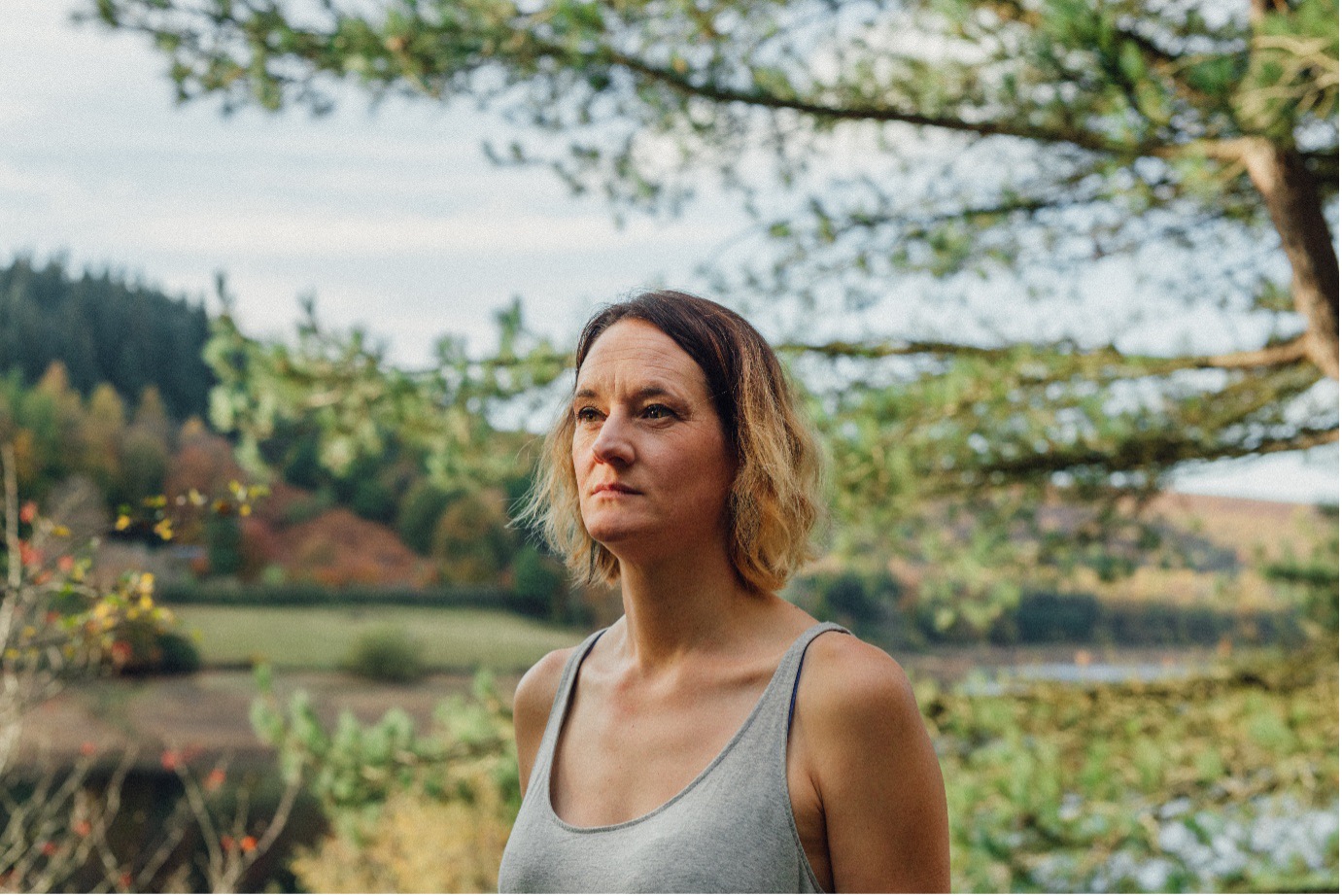
Genevieve Carver has published three books of poetry and one novel for children. Her work often focuses on human-nonhuman relationships and ecologies and archaeologies of place. She has won The Moth Nature Writing Prize and Max Porter has described her writing as ‘deeply funny and very sad at the same time.’
Self-Portrait as Narwhal Tusk
![Put a cetacean a CT scanner and you’ll find
their limbic system to be more developed than ours
[see: the orca mother who kept her dead calf afloat
for a thousand miles and seventeen days]
I’m in a room with polished pebbles on sills
trying to imagine feeling more
I almost fall from my faux-leather chair
splattering my limbic system all over
the Nordic-pattered rug, which is so beautiful
I want to ask it to be my prom date in 1998
when the therapist asks how I feel I say
I taste the world like a catfish, with my whole skin
a narwhal tusk is an inverted tooth – the nerve endings
are on the outside, exposed to the ice cream sea.](https://modronmagazine.com/wp-content/uploads/2026/07/screenshot-2026-07-15-at-8.13.12-am.png?w=922)
Zoë Brigley: This poem surprised me with its twists and turns across couplets. Could you tell us a little more about how it came into being?
Genevieve Carver: I’m very interested in science and a lot of my work comes from researching and reading about the nonhuman world – I’m basically like a ten-year-old with a book of animal facts. I was captivated to learn that cetaceans like orcas have more developed limbic systems than humans, which is the part of the brain responsible for emotion. When I came across other interesting ways that animals experience the world around them – that catfish have taste buds all over the bodies, and that narwhals have nerve endings on the outside of their tusks – I was struck by how powerful these experiences must be. As someone who struggles with emotional and sensory sensitivity I found it overwhelming to think that there are creatures out there feeling things even more intensely than me.
Zoë: One feeling I had after reading was how well you capture how strange creatures are with perhaps a hint of the strangeness in ourselves too, especially in the mysteries of the body?
Genevieve: I think at the heart of my work is the fact that we are animals, with our own unique traits but also with similarities to other species. I do find bodies of all kinds endlessly fascinating and am constantly amazed at the myriad of different ways that life has evolved on earth.
Zoë: I suppose there is also a sense of familiarity and what we think of as human too in the orca mother who refuses to let go of her dead calf?
Genevieve: I’ve been talking a lot about anthropomorphisation recently, which has been rightly criticised for imposing human concepts onto other animals. However, I think there’s another way of looking at this, that by seeing ourselves in other creatures, we’re not claiming them to be like us, but understanding how we’re like them. If you’re too rigid about not comparing humans to other animals, it actually reinforces the human-non human binary.
Zoë: You have some wonderful ideas and images in this poem, like the idea of tasting the world through the skin or the nerves being external on the narwhal tusk. Is documenting awe and wonder at nature key to changing our blasé attitudes to the more than human world?
Genevieve: I don’t believe that what I’m doing will change attitudes in any way but I do it because I’m curious and it brings me joy; hopefully it sparks similar feelings of curiosity and joy in readers. The images that you mention may invoke awe and wonder, but they’re also linked to pain in this poem, which I suppose is relevant in the context of what’s happening to biodiversity globally.
Zoë: Is there anything else you want to tell us about this poem?
Genevieve: I got into writing quite a few poems which like this one are sort of anti-sonnets, exploring the darker sides of traditional sonnet concepts like love and passion. It’s a fun challenge to set yourself for a 14-line poem.
Discover more from Modron Magazine
Subscribe to get the latest posts sent to your email.


