Interview by Glyn F. Edwards
Welcome back to our series on writing the #MoreThanHuman. We offer a set of interviews with poets and writers on how they approach writing about the environment. The more-than-human is a phrase that seeks to side-step traditional nature-culture dualisms and draw attention to the unity of all life as a kind of shared commonwealth existing on a fragile planet. It also reminds us humans that there is more to life, that there is more world, than the human. It relocates us in relation to the mystery.
This week we meet Claire Williamson who has published four poetry collections, the latest being Visiting the Minotaur (Seren, 2018). She is currently a Royal Literary Fellow at University of the West of England and works using writing at Southmead Hospital with patients and staff. Claire has a therapeutic writing practice online and lives on the Welsh Border, with her two daughters and Marty, the collie.
The Woods above Wimbleball Lake

Glyn F. Edwards: Wimbleball Lake is a man made lake on Exmoor in Somerset. The photographs suggest the dam that forms the reservoir was built on the site of a village, and involved displacing a resident valley community. Would it be possible to shed a little more ‘arrowed sun’ on the location and about your connection to the area?
Claire Williamson: Wimbleball Lake is man made and the valley was flooded for the purpose of the reservoir, two cottages Steart and Bessom (demolished) were submerged. Wimbleball – The Valley – Brompton Regis shows images before and after completion in 1979. I have been fascinated by these reservoir schemes since I wrote a community opera called Flood! (music by Mark Lawrence), which was performed at St Georges Hall in Bristol. It reminds me of bereavement and having to start over.
The ’arrowed sun’ refers to the shafts of light that filter through forests, ‘forest rays’ in an angled and purposeful way.
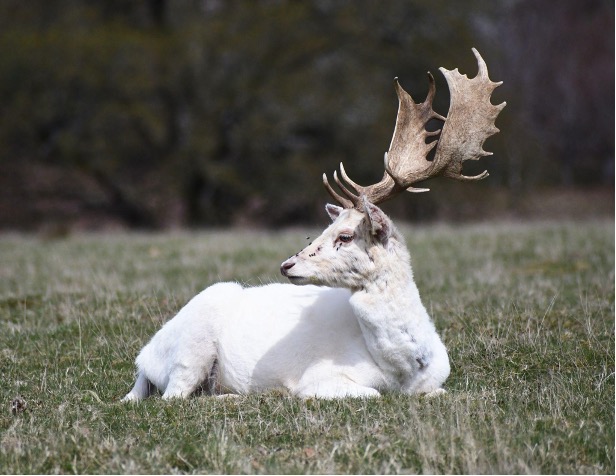
Glyn: The poem is formed in a loose sonnet structure. But, rather than a conventional form of love, there is here a sense of magic realism, and longing for connection with the more-than-human. Most significant seems the ‘white hart’ standing by the dam wall – could you elaborate on this image?
Claire: It is a very loose sonnet and I’m usually more formal when writing 14 lines. There is a theme of nature mirroring, or informing emotion, particularly the shock of a pheasant squawking and flying from the undergrowth.
The ‘white hart’ (mature male stag) does have a mythical element and a rich folklore history in England, not to mention a popular pub name in the UK, probably after the hart was chosen for Richard II’s heraldic badge. I envisage that ‘white hart’ as being a rare sighting which symbolises hope against the fear of the previous stanza. The ‘pegged star’ was as if it is something bright (like a star), anchored to earth, and the implication maybe that it is in the ‘arrowed sun’s’ illumination. There is a minor play on ‘white hart’ and a heart that has been wounded.
Glyn: ‘There is an end to the holding back’ implies that the speaker of the poem, and perhaps yourself, embrace the ‘cracks’ that ‘form’ in the structure of the dam wall. In a dam that will have created such conflict to erect, does the voice here acknowledge any conflict in its deterioration?
Claire: The dam feels like it is holding a huge weight of grief, with the water pressure always behind it. Being concrete, the dam is impermeable, and this hardening of the heart. However, being permeable is more healthy, so there is a tension between the cracks and deterioration, but also possible liberation, both of the landscape and of the feelings.
Glyn: The narrative voice seems slightly distanced from the structural decay, and even the title positions the poem above the scene. When you write the more-than-human, do you believe the rewilding process should be a naturally occurring change, or is there a voice in ‘The Woods above Wimbleball Lake’ that suggests a more active catalyst is required?
Claire: I believe that nature will do well without human interference, some of which was witnessed during Covid lockdowns. The unbound roots are a nod to nature not being tamed by man. Time will erode the dam without maintenance.

Discover more from Modron Magazine
Subscribe to get the latest posts sent to your email.

 Modron Magazine
remarkable!
LikeLike