Interview by Zoë Brigley
Welcome back to our series on writing the #MoreThanHuman. We offer a set of interviews with poets and writers on how they approach writing about the environment. The more-than-human is a phrase that seeks to side-step traditional nature-culture dualisms and draw attention to the unity of all life as a kind of shared commonwealth existing on a fragile planet. It also reminds us humans that there is more to life, that there is more world, than the human. It relocates us in relation to the mystery.
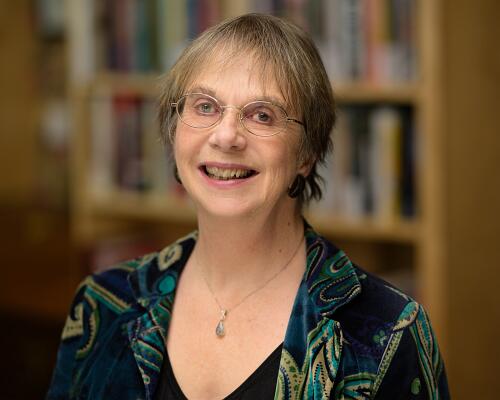
This week we meet Hilary Davies, a poet and essayist. Her fifth collection, Compass Light, was published by Renard Press in September 2025. She has been an RLF Fellow at King’s College, London and the British Library. In 2023 she was shortlisted for the Michael Marks Environmental Poet of the Year award.
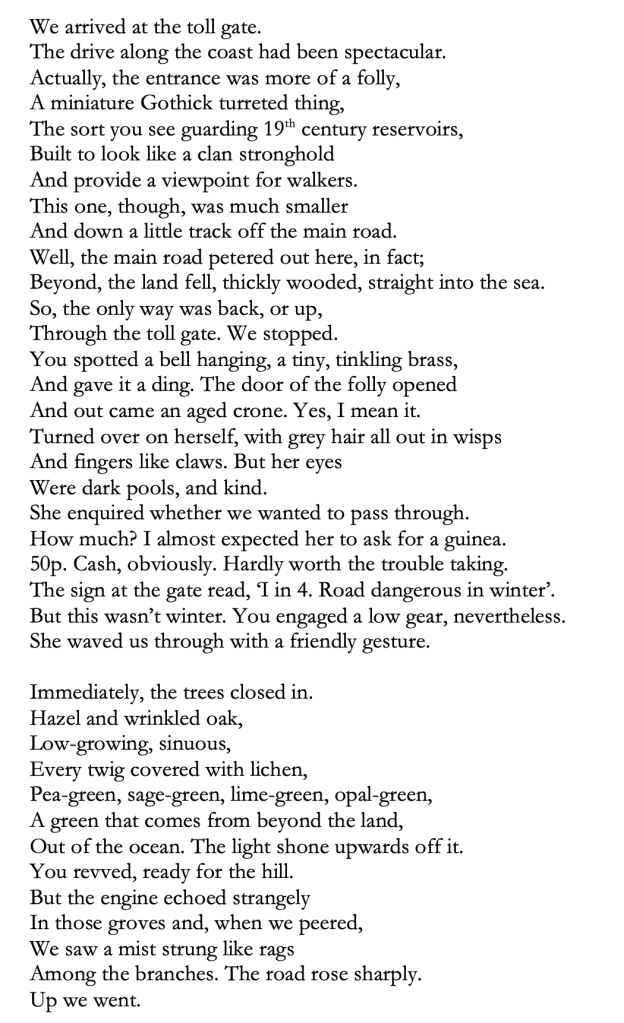
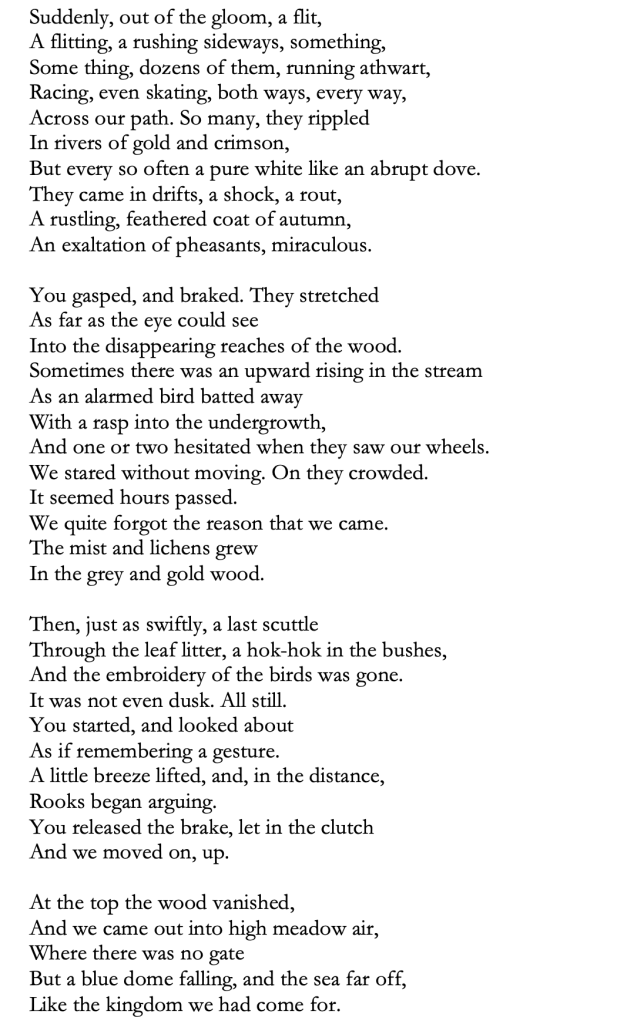
The Toll Gate
Zoë Brigley: Can you tell us about the place that inspired this poem? Was it based on a specific journey or location?
Hilary Davies: The toll gate, just as I describe, was on the coast road from Porlock Weir on the northern scarp slope of the Quantocks where they fall into the Bristol Channel.
Zoë: The descriptions of the trees, lichens, and birds are vivid and precise. How do you approach capturing these natural details in poetry?
Hilary Davies: These woods and others like them in Devon , Cornwall, Wales and Ireland are temperate rain forest, an ecosystem that is even more endangered than its tropical equivalent. One of its characteristics is low sessile oaks, hazel and birch, moss covered banks, trees and streams, and festoons of lichen that can often be magically multi-coloured. It is also the Arthurian forest, quite unlike the majestic oak and beech forests we think of in Central and Eastern England. As a child on holiday in the Brecon Beacons, where my father came from, I was used to spending whole days by the streams in such woods.
Zoë: The poem has a flowing, almost cinematic rhythm. How did you approach its pacing and line breaks?
Hilary Davies: I work very intensively on the precise words I wish to capture a visual image in my mind. I don’t think consciously about line breaks or pacing, but rather the language is chosen at the level of what the poet David Jones called, quoting the philosopher and theologian, Jacques Maritain, the ‘pre-conscious life of the intellect’. In other words, it is born of craft and practice over many many years so that it is no longer conscious. I always have a very powerful visual image in my mind when I write: in that sense, you could call my work cinematic.
Zoë: There is a sense of awe and revelation as the natural world overwhelms the human perspective. Is this a recurring theme in your work?
Hilary Davies: Yes. Except I wouldn’t use the word ‘overwhelms’ but rather say that the human is suddenly aware of a transfigured natural world.
Zoë: Is there anything else you want to tell us about this poem?
Hilary Davies: Like many of my poems, this poem was born of a sudden transformative ‘appearance’ of the world as different, other, revelatory. Such moments often lie maturing just below the conscious, in a liminal space, in my mind for years, even when they only lasted, as this one did, maybe twenty minutes at most. But about twenty years elapsed before I wrote the poem. You will also have spotted that it occurred on the hill up from Porlock Weir, and there is the subtlest of references to the significance of that placename for English poetry in the poem. But it is in no way a ‘poetic tourist’ poem.

