Welcome back to our series on writing the #MoreThanHuman. We offer a set of interviews with poets and writers on how they approach writing about the environment. The more-than-human is a phrase that seeks to side-step traditional nature-culture dualisms and draw attention to the unity of all life as a kind of shared commonwealth existing on a fragile planet. It also reminds us humans that there is more to life, that there is more world, than the human. It relocates us in relation to the mystery.
This week we meet Anstice Fisher, who has worked as a psychotherapist for 40 years and trained at the Scandinavian Centre for Shamanic Studies. Her poems reflect on the interconnectedness of people and the natural world, which pre-Christian and indigenous cultures have long understood.
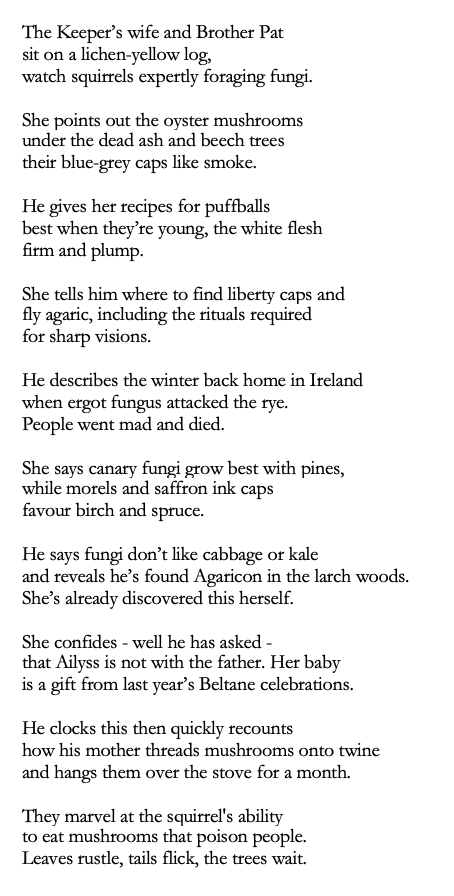
The Keeper of Medicinal Herbs & His More Knowledgeable Wife
Zoë Brigley: We are very interested in the team at MODRON about the kinds of herbal knowledges that have been passed down for generations. What inspired this focus?
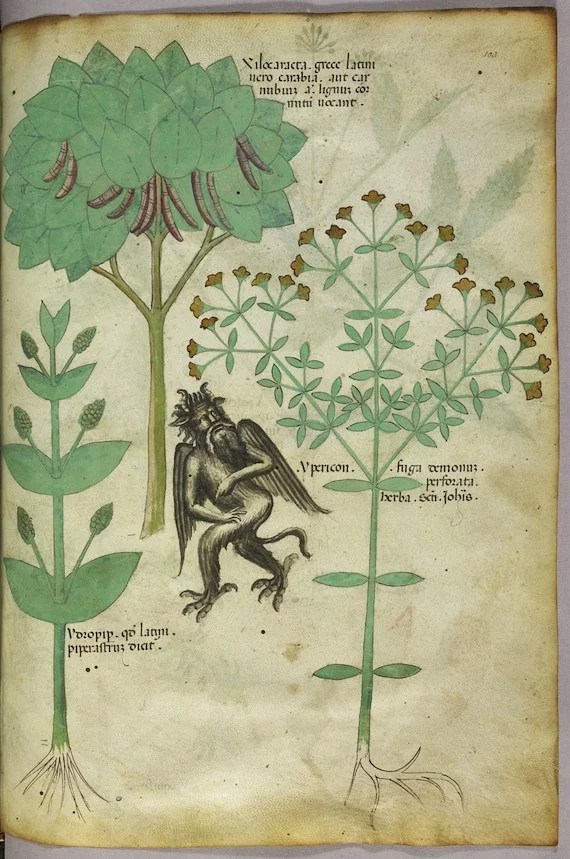
Anstice Fisher: This poem is one of a sequence of 20 set on an unspecified island off the coast of Britain over 1,000 years ago, when the Christianisation of the country was well underway but by no means complete. I’ve long been fascinated by pre-Christian cultures, not just in Britain but across Europe. These cultures tended to have an animistic worldview in which everything is experienced as alive and conscious in its own particular way.
As a result these cultures highly valued and appreciated knowledge of plants and herbs, and passed this down from one generation of elders to the next. Over time, much of that knowledge was lost or discarded as primitive under the influence of Christianity and western modernity. More recently people have been rediscovering this knowledge experientially, at the same time as scientific research is giving it new credibility.
Zoë: I also love that idea of women being the keepers of that knowledge as we can see from the title. I wonder if you could speak to that?
Anstice: There’s an irony here, as it’s the man who holds the title ‘Keeper’. I call the wife ‘more knowledgeable’, and invite readers of these poems to reflect in what ways she may know more. It seems people have always been wary of the power and craft of women. Witches, shamans, wise women – whatever their names, they were at risk of persecution. Still today they may carry less authority than that given to men or to science, especially if their knowledge is intuitive. At the same time, it’s good to remember that women don’t have the monopoly on intuition, nor men on science, and both men and women may claim more knowledge than they should!
Zoë: You mention a baby created in the passion of Beltane celebrations. Just the mention of that rite, however, puts me in mind of a different way of passing time and measuring the turns of the year and seasons. I wonder how looking back to those rituals might change the way we think about nature and the world.
Anstice: Beltane is May Day, a traditional celebration of fertility. Spring is at its peak, the ground is rich and potent. Earth and Sky, May Queen and Green Man, seed and field, young men and maidens of the villages – union is invited on all levels. The baby referred to is the result of a Beltane night.
Identification with nature and attunement to its rhythms of time, light and darkness were common in animistic cultures. These cultures had a seasonal understanding of when to plant, to harvest, to leave fallow. They knew that to care for the land is to care for the self and the community. They marked these crucial seasonal junctures with rituals and festivals like Beltane.
As we developed more ‘sophisticated’ ways of life – with obvious benefits – we came to see ourselves as above and separate from nature and other life forms, privileged by God himself who regarded humans as the only divine species with a soul. From the invention of the light bulb, to the Protestant ethic and the demands of industrial labour, the need to live by natural rhythms, or even to be aware of them, has largely been removed.
With this in mind, we could enjoy the original significance of Christmas and Easter as seasonal markers, and revive or create new rituals that align us with the cycles of the year.
Zoë: Is there anything else you want to tell us about this poem?
Anstice: This particular poem in the ‘Keeper’ sequence describes an indigenous knowledge of fungi. Much of this knowledge is lost or still a mystery – indeed for a long time people were unsure whether fungi were plants or animals (they’re neither).
Research is rediscovering many medicinal properties of various fungi, used for example as antibiotics, statins, immunosuppressants for transplants. Psilocybin is being used to treat depression, while researchers are studying fungi such as reishi and lions mane for their role as adaptogens. We’re also discovering more about the ecosystem of the mycelium networks of fungi that lie beneath ground. This decentralised, non-hierarchical network, which shares information and sends nutrients to plants, trees and other organisms, is surely a good model for many human organisations too.
As scientific research continues, there’s a risk that fungi and plant medicines become just another commodity to extract and exploit. My hope is that this exploration honours the old, more animistic ways that humans have worked and lived with other life forms, respecting the land and understanding ourselves as mutually interdependent.

