Imogen Davies in conversation with Natalie Holborow on her poetry collection Little Universe, shortlisted for Wales Book of the Year 2025
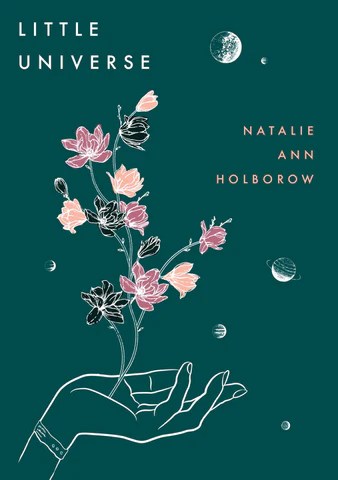
The poems in Natalie Ann Holborow’s third collection, ‘Little Universe’ (2024), are an exploration of tumultuous human emotions and nature’s ever-present rhythms. Lives bustle within a busy hospital’s walls, humming against the Gower landscape that stretches beyond its windows. The tiny worlds of a wide cast unfold as they deal with their own emergencies, losses, recoveries, hopes and histories.
Medical students stride along the corridors in rubber shoes. A janitor is crying in the Gents. The flowers at the hospital entrance shrug themselves back into earth. The biblical Lilith offers knowledge from one woman to the other. The characters in this book are all bound by the undying pulse of existence – yet their stories serve as a reminder that despite these stark contrasts, life persists.
Imogen Davies: What inspired you to write Little Universe?
Natalie Ann Holborow: I started writing Little Universe in 2020, that year when the world pretty much turned itself inside out. At the time, family members of mine were working in the NHS, heading into hospitals and risking their lives every day while office workers like me made sourdough and banana bread for some reason. In the middle of all this, my grandfather was diagnosed with stage 4 cancer, which shattered me.
Just weeks after he passed away, my nephew Leo was born in the same hospital where we’d said our goodbyes.
The book, over time, unfolded into a dance between grief and hope. It unfolds partly in Singleton Hospital, where I spent hours at my grandfather’s bedside, looking out at Swansea Bay. There’s something almost sacred about that view. The sea continues its steady ebb and flow while inside the hospital, everyone is dealing with their own fight, where every minute counts. Even now, when I go in for diabetic clinic appointments, the sound of gulls tapping on the roof soothes me somewhat, transporting me to the South Wales landscapes I’m so blessed to live near.
In that strange, suspended year, so many of us turned to nature as a kind of collective exhale. Our little universes felt like they were collapsing, and yet outside, trees held on stubbornly, birds flung themselves out of the branches and the tides kept sweeping in and out, just as they always had. I wanted Little Universe to hold space for that. For the sorrow, but also for those softer moments of hope.
Imogen: What was the creative process of writing Little Universe?
Equal parts caffeinated introspection, some moderate despair, long miles of running and a very persistent muse who, as it turns out, does not like to be ignored because you’ve “quit poetry”. Which I did, briefly. After finishing Small, writing felt impossible. My gut was telling me: write. My heart was telling me: write. But my head was saying: what’s the point?
For months, I avoided even reading poetry because it only confirmed my worst fears: I will never write as well as these other poets do. Every beautiful line I should be marvelling at was just another trigger for my brain to say: And look! This is why you shouldn’t bother. You don’t have this sort of capability. Give up.
The problem was that I’d disconnected from my purpose for writing. Over time, you get distracted by reviews and acceptances and awards. You focus on the end goal and lose all joy in the process. I needed to get back to that. I needed to just let go and listen without striving for perfection.
So I listened to very sad music. I ran. I hope no one could hear the tinny echo of my headphones because I probably looked like I was having some sort of crisis, listening to Sufjan Stevens and The Antlers while pumping my legs uphill and panting.
But it helped me navigate the complicated tension between grief and hope (even if my running playlist has since returned to Lady Gaga).
Imogen: Are there any poets or certain poems that inspired you while writing and creating this collection?
Natalie: Music shaped this collection a lot; both Hospice by The Antlers and Carrie and Lowell by Sufjan Stevens helped me feel things as deeply as I needed to feel them. As for poetry, The Father by Sharon Olds, Rebel Blood Cells by Jamie Woods and In Search of Equilibrium by Theresa Lola all provided comfort in the way they describe the tensions between grieving and living. Of course, I am fortunate to know so many excellent poets in Wales too, but these three poets were the ones that really captured how I was feeling in a way that held me.
Imogen: How important is the collection’s overarching structure, divided into four sections – ‘Pulse’, ‘Inhale’, ‘Exhale’ and ‘Departure’?
Natalie: To me, it felt like the cycles of seasons and the stages of living. It mirrored the arc of a life, or maybe a moment of transformation, like those big sighs you take when you’re about to cry or you’re deeply in love. Each section holds its own rhythm. Pulse is the heartbeat, the living. Inhale and Exhale are that middle place; grappling, gasping and growing, intertwining the lives inside the hospital walls with the world outside. And Departure is, naturally, the release. The inevitable goodbyes before the cycle starts again.
Imogen: What inspired the title of the collection? Your poem of the same name that appears in the third section or the quote by Walt Whitman, ‘Let your soul stand cool and composed before a million universes’, that you use as an epigraph?
Natalie: The poem named after Leo turned out to be the beating heart of this collection (it was originally called Pulse, but something about it didn’t feel totally right). Leo is autistic, and there’s a quiet magic in the way he orders his planets: Mercury to Neptune in a perfect line across the carpet, every time, over and over again. Watching him align his tiny universe helped me find peace in a world that felt like it was being shaken upside-down. His patterns and this beautiful fascination with the planets inspired the title poem. He’s taught me that his universe is different from mine, but just as worthy of wonder.
Whitman’s words, “Let your soul stand cool and composed before a million universes,” stopped me in my tracks. It came after, but it fit the book perfectly. There’s something wonderfully profound about it: the idea that each of us carries galaxies inside, that grief, love, rage, joy, all swirl in their own constellations. The title became a kind of meeting point between poem and philosophy, and between the tiny and the infinite.
Imogen: “Strange, how the landscape shapes us.” is a line from ‘Guillemots’, one of the poems from the collection, how influential is Wales and the Welsh landscape to your work?
Natalie: Sometimes I have to slap the pen out of my hand to stop me mentioning gulls. Poets can’t get enough of gulls (which is why these were, instead, guillemots – I’m rebelling outrageously).
I live in North Gower, where on my morning run I can’t help but tap lines into my phone about the ghost of last night’s high tide, all wrack and feathers, punctuated with broken cockle shells and clumps of wool. South Gower’s not too far to explore after work, all sweeping cliffs and glittering surf. It’s hard to be glib about your emotions when you’ve got that kind of beauty lurking just beyond your home office window.
I don’t have to invent metaphor here when it’s already baked into the land. Sometimes it soothes and sometimes it sulks, whipping fine rain beneath your hood. But where else can you write about grief and beauty in the same sentence and have the scenery do half the work for you?
Imogen: You experiment with poetic form throughout the collection, ‘Recovered’ and ‘Mountain Song’ seem to have naturally surfaced on the page, what is your approach to constructing poetic form?
Natalie: I treat form like I treat shoes: some days I want the comfy ones, other days I want to make a statement with my most ridiculous heels. Some poems arrive pre-shaped, writing themselves in the way they want to be read. Sometimes, what I think works is actually made stronger by a brilliant editor who will get me to try it in another shape (my editor at Parthian, Susie Wildsmith, is excellent with pushing me further). Other poems make me wrestle them into shape like unruly jigsaw puzzles. But I don’t try to force it. If a poem wants to be a whisper instead of a shout, or a scattering of words instead of a neatly boxed paragraph, I let it. Mountain Song changed shape many times, starting as what looked like a prose poem and eventually climbing down the page in a way that mimicked that of a hiker’s footsteps. It’s just about being playful with form and being open to new possibilities.
Imogen: While some poems seem deeply personal and look inward onto the self, others look outward as you depict or embody different characters and personas – do you enjoy stepping into someone else’s shoes and imagining the world from their perspective more than you enjoy expressing your own?
Natalie: There’s something exciting, or sometimes challenging, about slipping into someone else’s skin for a while; imagining the world through their eyes: their regrets, their hopes or their secret Spotify playlists (there’s a poetry idea right there for someone if they need it). The deeply personal poems are probably the ones that leave me most breathless. But really, I like both. It’s good to come out of yourself for a while and try to see things through someone else’s eyes. It’s a habit that’s worth taking into everyday life, too.
Imogen: What do you hope readers will take away from this collection?
If someone reads a poem and thinks, “Yes, that’s it, that’s what it’s like”, then that is enough for me. That moment of connection is my reason for writing, and the process of working on this collection has reminded me of that. It’s less about answers and more about using those words to say: “It’s okay. I get it.”
I want readers to feel that they’re not alone, especially in the messier emotions. Grief, loss, love, joy and the whole gorgeous and chaotic spectrum of being human is all in there. Sometimes life doesn’t give you the space to sit with those feelings, but sometimes a poem can offer that pause, that moment of recognition and that deep breath you didn’t know you needed to take.
Imogen: As well as poetry, you have also been writing prose recently. You won a short story competition recently at Mslexia and your first nonfiction book, Wild Running, is out with Seren. Could you tell us more about that book and your relationship with nature and the Welsh landscape?
Natalie: What started as a guidebook later evolved into something else entirely; part-memoir, part-love letter to Wales and part-examination of the mysterious creative process that we writers love to immerse ourselves in, even if it’s uncomfortable at times. I didn’t even know what wild running meant initially, but I have come to understand it as running as natural instinct, no matter where it’s done.
The landscape of South Wales is almost like a character in itself in this book. Pen Pych warmed me. Llanrhidian was home. Pen Y Fan tested me big time. When the place becomes a character of its own, it also changes how you move through it. You stop treating it like a backdrop and start moving with more attention. Loughor Estuary, for example, all silver mudflats and winding rivers, is where I ran for so many years through my late teens and twenties. I photographed it almost every morning; in every weather, in every light. It still looked like it was dressed differently every time, but provided me with the familiarity and comfort I needed for all those years. Maybe that’s what wild running really is, when you strip it all back: moving with nature, not just simply taking a photo and turning away. I let it guide me, met it as it was and listened to any inspiration that came my way. I learned to listen to the landscape rather than rush through it, and in time, I trusted it to shape my pace, my breath, my thoughts and my writing. It’s the creative process, recorded in real time. Nature and the Welsh landscape is something I wanted to show as a central part of how my writing is shaped. The interesting thing is that the messy process of running (often the wrong way) lowered my fear of returning to fiction without things being perfect first time. I have written a lot since.
Natalie Ann Holborow is a winner of the Terry Hetherington Award and the Robin Reeves Award and has been shortlisted and commended for the Bridport Prize, the Hippocrates Prize for Poetry and Medicine, and the Cursed Murphy Spoken Word Award among others. Her writing residencies with the British Council, Literature Wales and Kultivera have seen her writing and performing poetry in Wales, Ireland, Sweden and India. She is the author of the poetry collections And Suddenly You Find Yourself, Small – both listed as Best Poetry Collections of the Year by Wales Arts Review – and, with Mari Ellis Dunning, the collaborative poetry pamphlet The Wrong Side of the Looking Glass (2020). Little Universe is her third full collection. Her first non-fiction book, Wild Running, is out with Seren. Website – Natalie Ann Holborow
Imogen Davies is a 24-year-old Welsh writer and creative from Aberystwyth. With a bilingual upbringing in Welsh and English, she went on to study an undergraduate degree in French, Spanish, and Catalan at Durham University while currently undertaking a Masters in Modernist Literature at the University of Edinburgh. Her first self-published collection, DISTANCES (2024), explores modern relationships, the natural world and her Welsh identity, as discussed on BBC Radio Wales and BBC Radio Cymru. Named as one of sixty New Welsh Poets by Poetry Wales, her work has appeared both online and in print in various literary magazines, such as New Welsh Review and Acumen Young Poets, among others. Website – Imogen Davies
 Modron Magazine